Clock in for the cure
A fundraising campaign that reframed donations from dollars to work hours, surpassed its 4,000-hour target, and was rolled out nationally by the client.

A fundraising campaign that reframed donations from dollars to work hours, surpassed its 4,000-hour target, and was rolled out nationally by the client.
The short version: CLAC, a Canadian union representing over 60,000 workers, needed a fundraising concept in support of Breast Cancer Awareness Week. The challenge was getting union members at a remote worksite to participate and contribute, without disrupting operations or asking workers to part with money many of them were already sending home.
The insight was simple: stop asking for money. Ask for time instead.
My role: Associate Creative Director on the project, serving as the primary creative on the campaign with a supporting team, and a Creative Director above me for concept approval.
The test site was a Kiewit Corporation worksite in Fort McMurray, Alberta, with a workforce of approximately 3,000 members. The initiative was designed as a test to determine the feasibility of a larger national rollout, so it had to work on two levels: generate real member participation and secure corporate support, without disrupting operations.
A significant portion of the workforce was migratory, saving money for when they returned home or sending it back immediately. Asking for a cash donation presented a real challenge. At the same time, any event or activity that disrupted operations would lose corporate support before it started.
The fundraising mechanism had to work for both audiences: easy enough for members to say yes to, and invisible enough to operations that the company would support it.
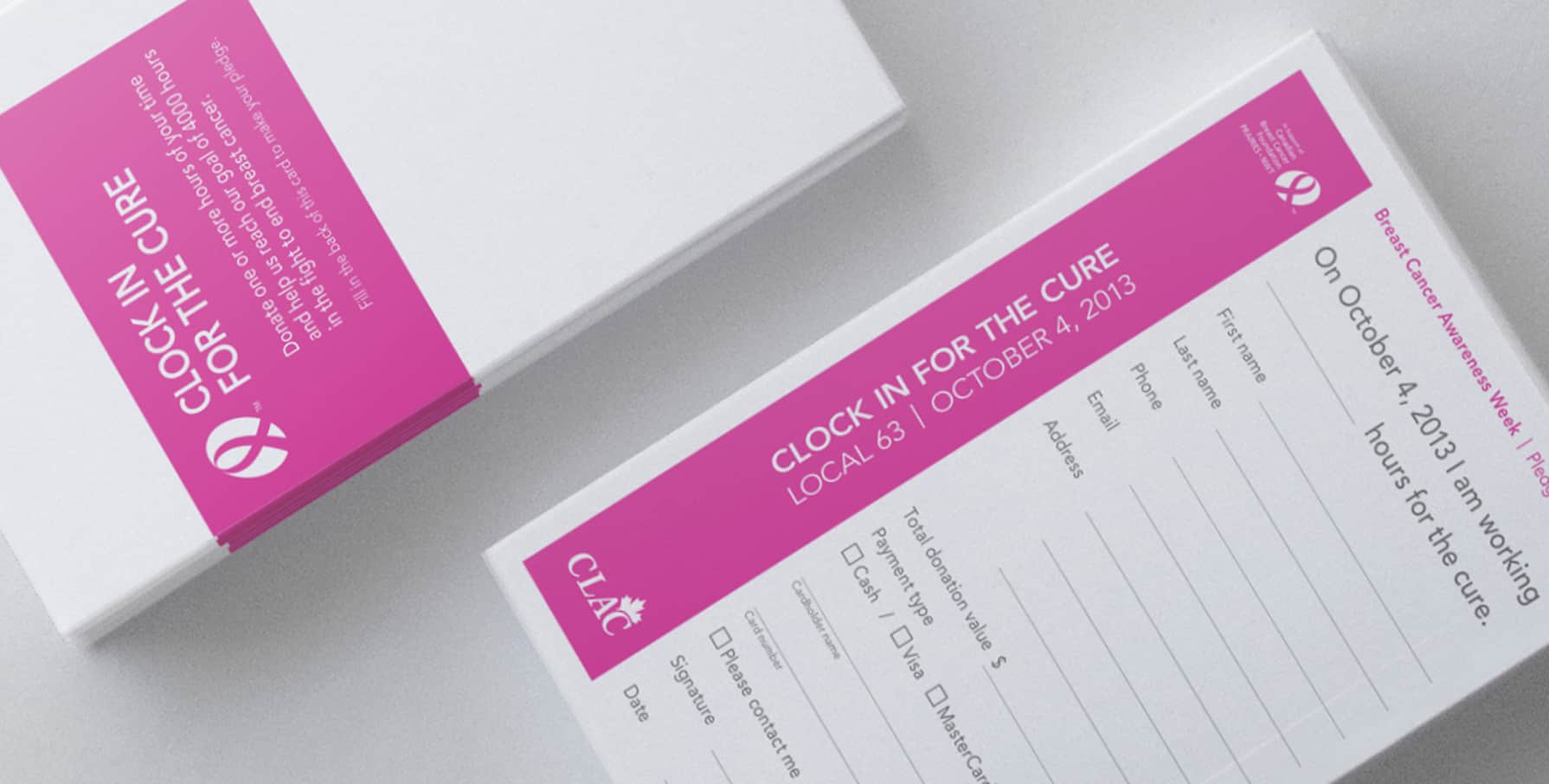
The insight. The reframe was the campaign. Rather than asking members to donate money, we asked them to donate time. Members could pledge however many work hours they chose, with the equivalent wages going to the initiative. The donation would come off their paycheques, which meant the money was captured before it could be sent elsewhere. And because the contribution was framed as time, members were not thinking about what they were giving up financially. They were showing up for work the same way they did every other day.
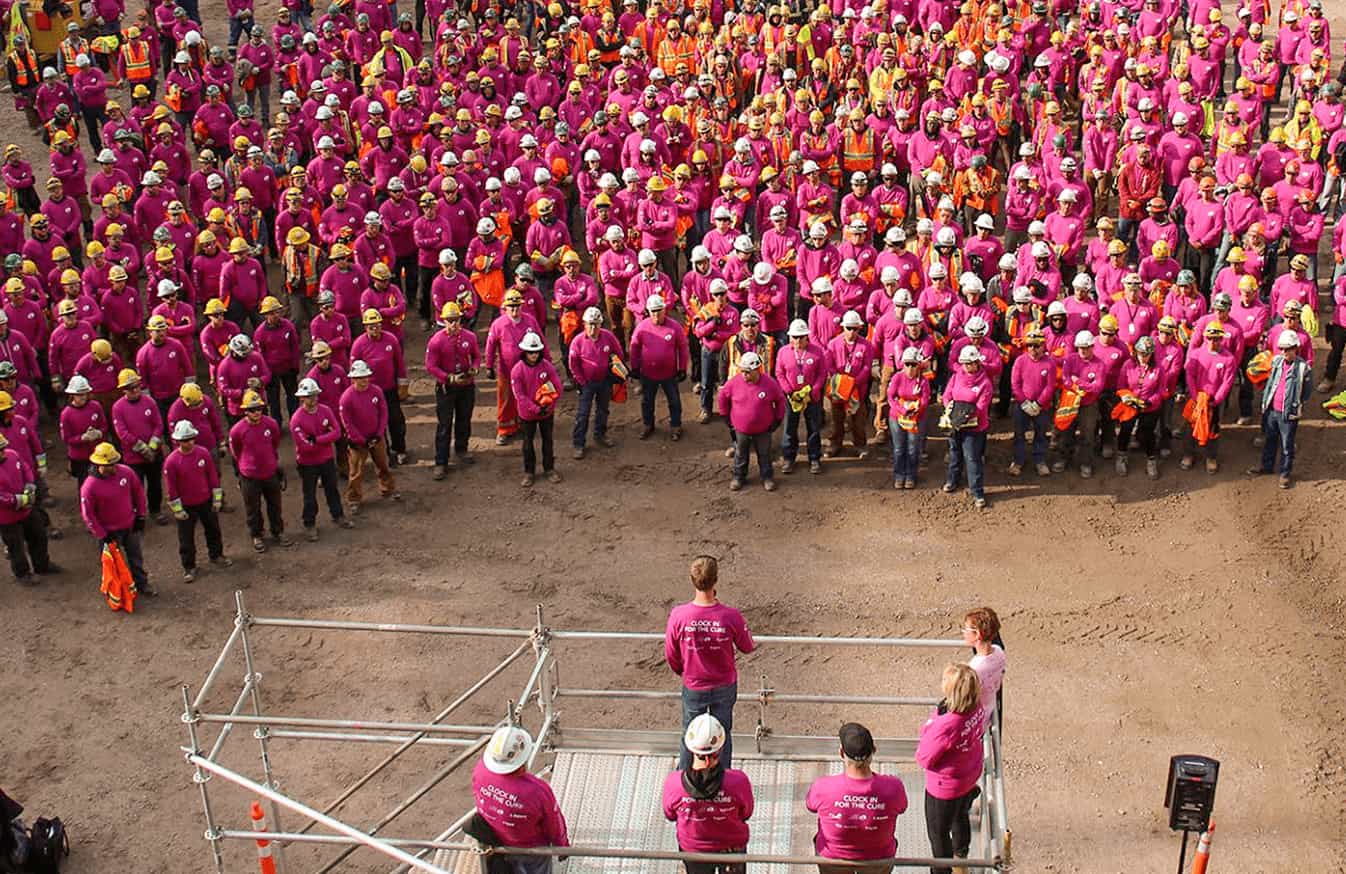
From the corporate side, this removed the barrier entirely. There was no event to host, no activity to accommodate. The only disruption was a short kick-off rally held during a shift change, a low point in the day’s production.
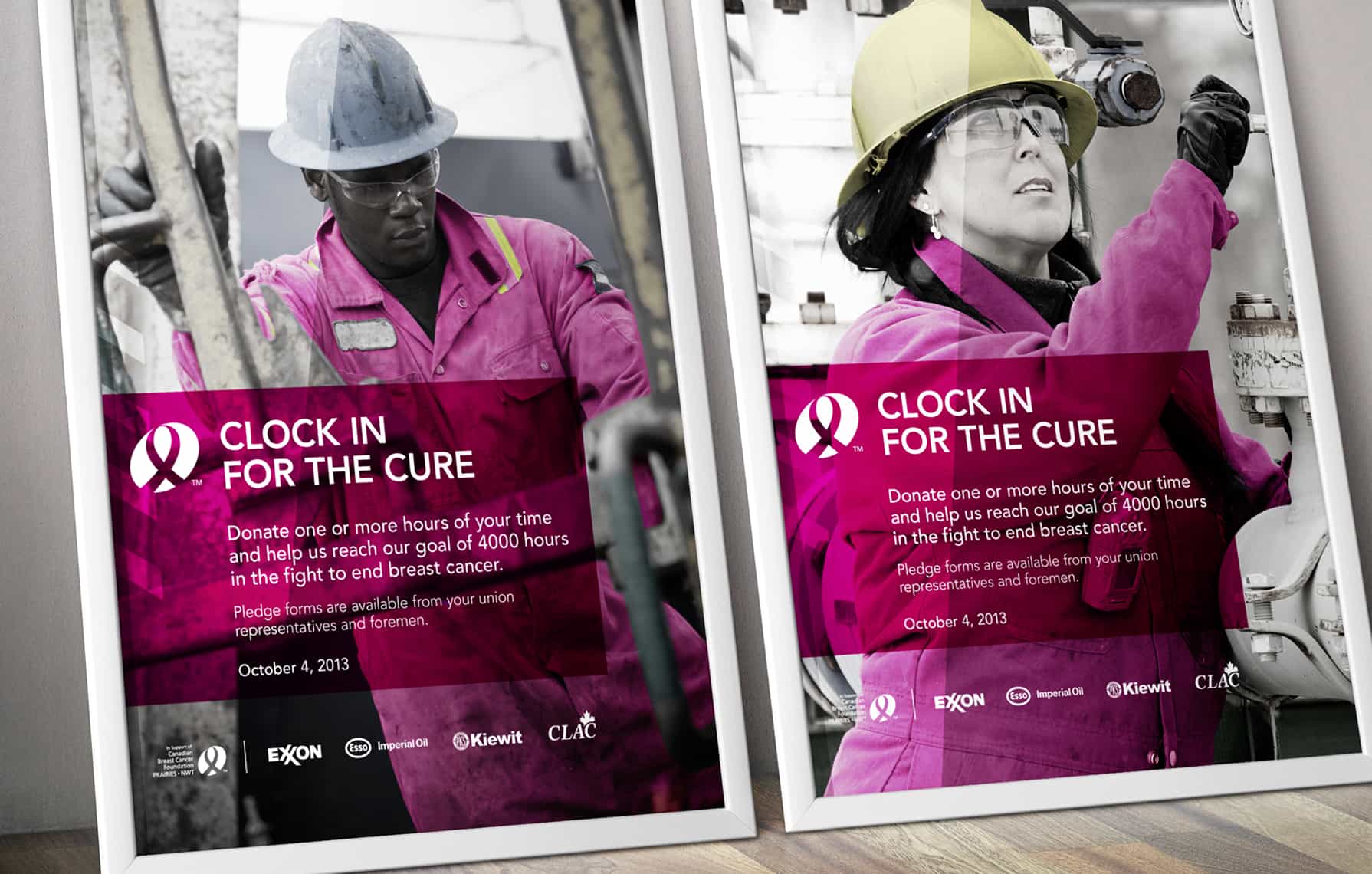
The creative. The campaign identity was built around stock photography, which presented its own challenge. Canadian worksite safety regulations are specific, and most stock photography does not reflect them accurately. Finding imagery where workers were wearing the right type of helmets, gloves, and protective equipment required careful selection. The visual treatment was almost entirely desaturated, a near black-and-white palette, with pink applied selectively to the workers’ uniforms to connect with the t-shirts distributed to members for the kick-off rally. Pledge cards and posters drove awareness on-site, giving members a tangible way to make their commitment.
The campaign surpassed its target. The initial goal had been set at 2,000 pledged hours based on the workforce size. Early feedback was strong enough that the target was raised to 4,000 hours, and the campaign exceeded that as well. Corporate support was secured from both Esso and Exxon.
Based on the results, CLAC committed to rolling the initiative out across all their member worksites nationally, putting it in line to become the second largest breast cancer fundraising initiative in the country after Run for the Cure.
The strongest creative decisions on this project were strategic ones. The reframe from dollars to hours was not a tagline or a visual concept. It was a fundamental rethinking of how the ask was structured, and it solved two problems at once: it made participation easier for members and it removed the operational objection for the company.
The photography detail is a smaller but meaningful point. Ensuring the imagery reflected actual Canadian worksite safety requirements meant the campaign felt credible and true to the audience rather than generic. In a context where authenticity matters, that kind of detail earns trust.